
Prevent the preventable: Before the shift starts
Three Mitti customers show how pre-shift checks, sensors and QR reporting spot small problems early, plus questions to ask clients.
Published

Three Mitti customers show how pre-shift checks, sensors and QR reporting spot small problems early, plus questions to ask clients.
Published
Every shift starts the same way. Someone clocks on, climbs onto a forklift and gets on with the day.
Most of the time, that’s the whole story. But now and then, something small is waiting inside the routine. A loose wire. A door that hasn’t quite shut. A missing screw on a chair. None of it announces itself, and the cost depends on who spots it first.
Closing that gap rarely takes anything elaborate. A check before a shift, a sensor on a door, training aimed at the right spot. Three Mitti customers show how each one works, and what it could change about the questions you ask at renewal.
At an Australian food manufacturer, every forklift is checked before every shift. Drivers work through a checklist in Inspections and add a photo for any fault.
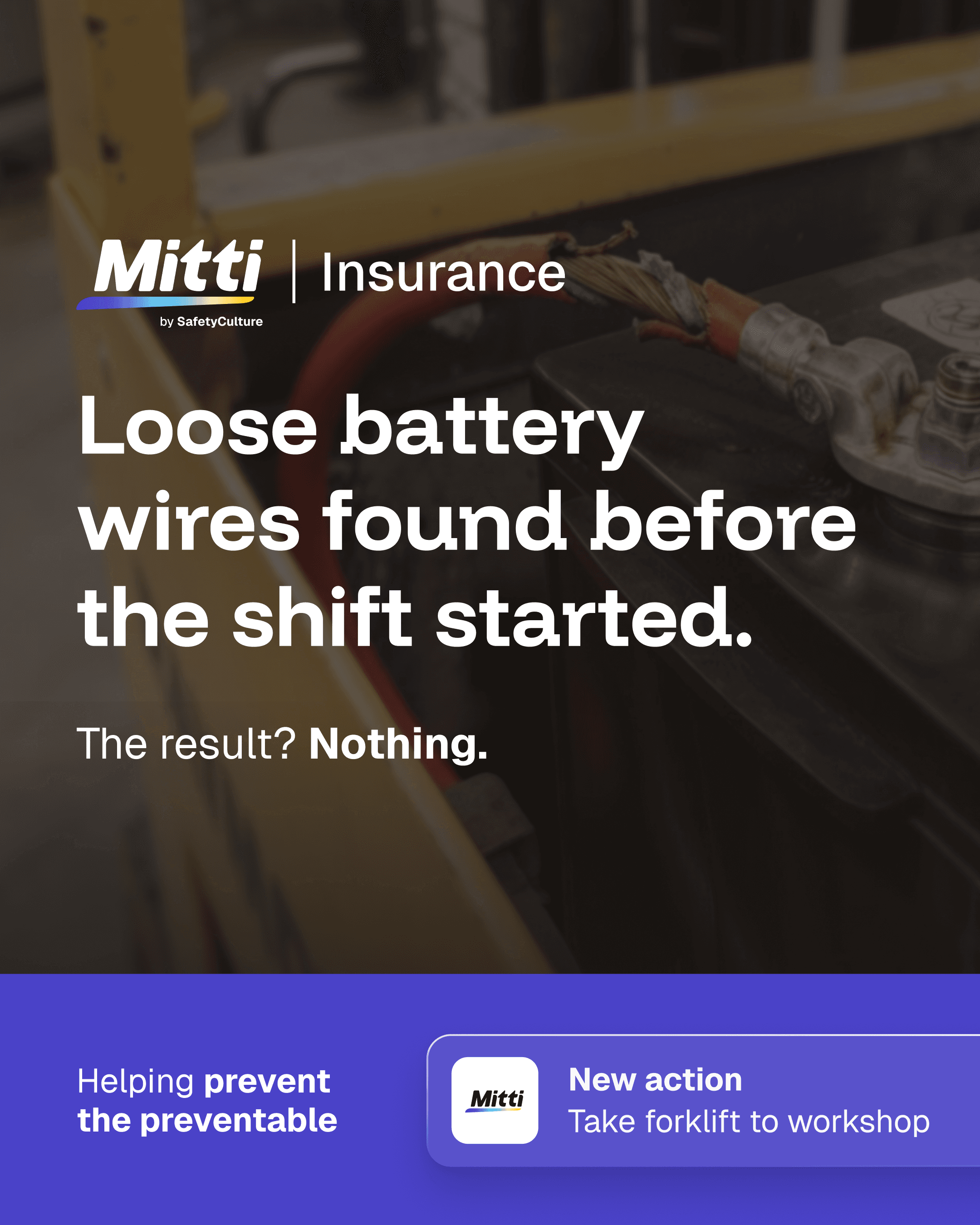
One morning, the check flagged loose connections and faulty wires on a forklift battery.
A maintenance request went out that same morning. The wires were replaced before the forklift moved. Nothing happened that day, which was the point.
It would be easy to file this under equipment maintenance. The person who’d have been driving it might see it differently. Data shared by Allianz Australia puts personal injury claims related to forklifts at $123 million (reference here), and forklifts are the second most common asset owned by businesses globally, so this sort of exposure sits in a lot of your clients’ sheds.
The timing is the useful part. The check happens before the shift starts, so a problem is found while it’s still a maintenance job, and the person closest to the machine is the one who finds it. For you, it’s also a record of what a client does day to day, not just what’s written in a policy. It shows how they think about risk, too. A business that checks before the shift starts is usually treating risk as part of running the place, not a job for renewal time.
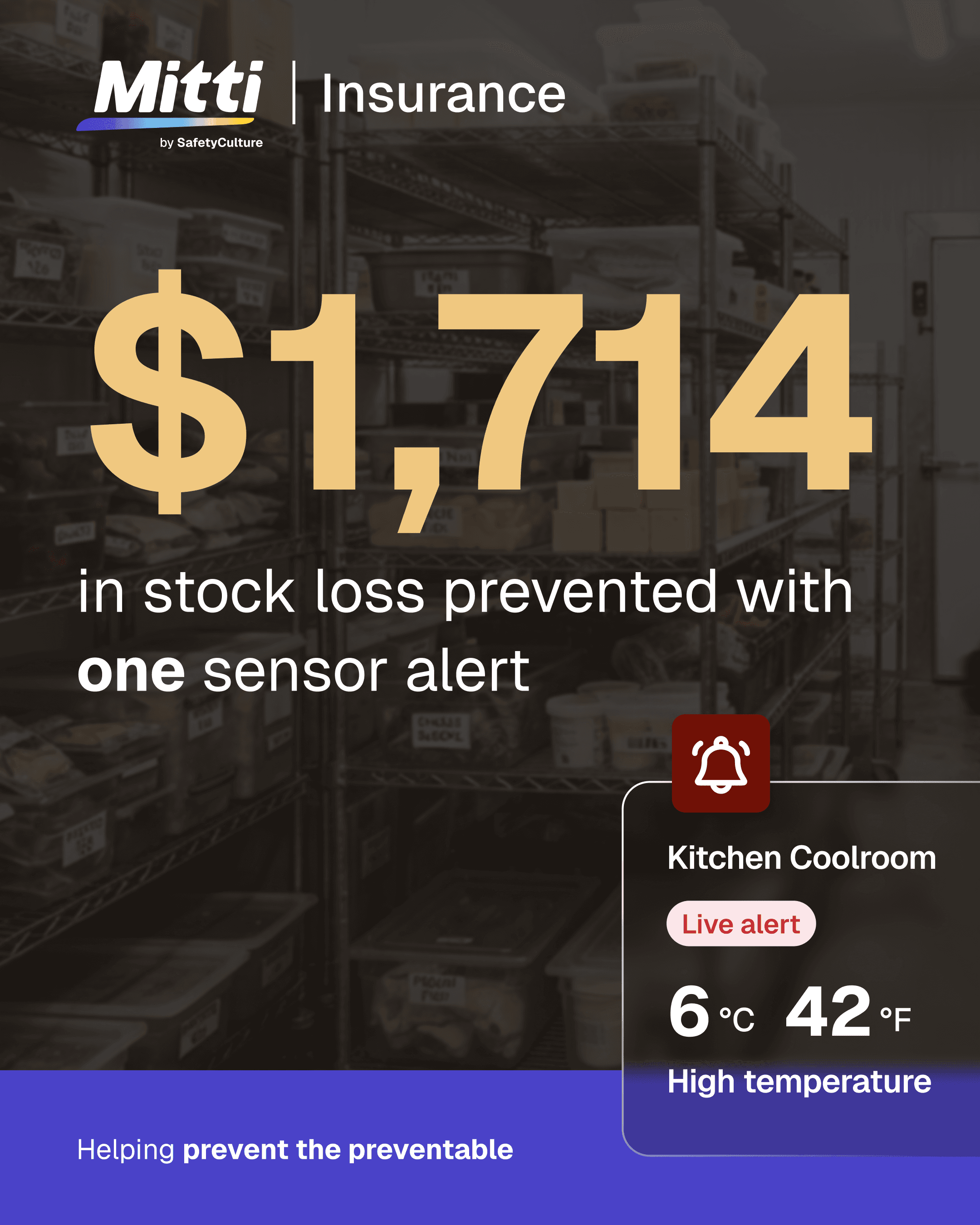
A freezer door left open over a weekend usually goes unnoticed until Monday.
One Mitti customer had a sensor on theirs. When the door was left open, it sent an alert and someone got there first. The stock loss in this case was $1,714.
Nothing about it is dramatic, which is what makes it easy to picture in a client’s own premises. The sensor didn’t make anyone more careful. It just kept watching across the weekend, overnight and through every handover.
The business had decided ahead of time how it would find out.
That’s a choice, and it gets made before anything goes wrong. Someone had to put money and time into a sensor, set it up and make sure the alert reached a real person, all while the freezer was working perfectly well. Prevention rarely comes with a deadline, which is why it’s so easy to put off.
The payoff, when it works, is a Monday morning that looks like any other. It’s a handy example for a client who’s weighing up where to spend.
Trippas White Group runs more than 150 venues across six states, with around 3,000 people on the roster. For a long time, an issue meant a piece of paper that travelled to head office while everyone hoped for the best. Even the 152-question safety audit could be ticked off at a desk and filed in a drawer.
Then they put a QR code on the wall. Staff could scan it, snap a photo and file a report in seconds. Some were the sort of thing you’d expect, like a fridge running at the wrong temperature. Others were smaller and sneakier, like a screw missing from a guest’s seat.
The group’s compliance manager’s first reaction was to wonder whether they really had this many issues. They did, and they’d been there all along. Reported hazards and near misses rose 17x a month – but this wasn’t a bad thing.
Triage came next. Each report is rated low, medium or high, so a scratch on a wall doesn’t compete with a nail poking up on a stair.
That visibility showed where help was needed most, and the group aimed its training there. Its lost time injury frequency rate came down.
It’s the long game that this year’s National Safe Work Month theme, “Safe work is for life”, points to. An injury at work can stay with someone long after the shift ends, and the training that stops it gets built well before anyone picks up a knife.
On one site visit, the compliance manager asked a junior chef how things were going, and she mentioned her fridge was running at an odd temperature. When he asked whether it had been reported she said it had, through the app, and when he checked, the report was already there.that’s a quiet sign of progress.
In a traditional kitchen, news like that used to work its way up through the exec chef and the sous chefs because some people were – in his words – “too scared to speak up”. Now the most junior person in the room can put a problem in front of the right person with a photo in seconds, and nobody needs to be brave to do it, only to scan.
Next time you’re across the table from a client, these three are worth a try. They’re conversation starters, and none of them needs a policy document.
The answers tell you how a business notices things, which is often as useful as a list of what it owns.
Three businesses, three different ways of noticing. A check before a shift, a sensor on a door and a sensor on a door and a QR code on the wall.. None of it is complicated, and each one found something while it was still small.
That’s the idea behind Prevent the Preventable: the small thing, found early, while it’s still easy to fix.
It’s also National Safe Work Month, which runs to the end of October. Across Australia, there were more than 400 serious workers’ compensation claims a day in 2023-24.
Insurance products are issued by Mitti Insurance Pty Ltd (formerly SafetyCulture Care Australia Pty Ltd) ABN 54 662 653 303 AFSL 544306 as agent for the insurer for the respective product. Neither we nor any insurer we represent provide any advice on any insurance based on any consideration of your objectives, financial situation or needs. Policy terms, conditions, limits, exclusions and underwriting criteria apply. Before making a decision on any product, please refer to the Policy Wording available from this website or call your broker for further information. If you purchase insurance, we will receive a commission and/or fee that is based on the premium.