
Supply Chain Disruption: The Insurance Conversation Worth Having
Global supply chain disruption is reshaping how claims unfold — and most businesses won't realise it until they're in one.

Global supply chain disruption is reshaping how claims unfold — and most businesses won't realise it until they're in one.
Your clients are already feeling it — whether it's the manufacturer waiting months for imported components, the retailer absorbing freight cost increases they can't fully pass on, or the construction business watching timelines blow out because materials aren't available.
Supply chain disruption isn't a headline anymore. It's a daily reality for most businesses, and it's been that way for a while now.
Geopolitical conflict has rerouted shipping lanes and triggered sanctions that cut off access to key goods overnight. Port congestion, logistics bottlenecks, and labour shortages have compounded the problem. When the movement of goods slows, the cost of everything connected to it goes up — materials, components, labour, and delivery. Inflation has been the most visible consequence, but for businesses that rely on global or regional supply chains, the operating environment has fundamentally shifted.
As a broker, the news your clients are reading every morning is directly relevant to the conversation you should be having with them. Most haven't yet connected what's happening in the world to what it means for their insurance program.
The supply chain problem doesn't stay at the operations level. It flows directly into claims, and the impact is bigger than most businesses expect until they're already in one.
Business interruption cover is particularly vulnerable. Indemnity periods and sum insured levels were set against a very different economic backdrop. With costs rising and claim durations increasing, policy limits and indemnity periods that looked adequate at inception may no longer reflect what a business actually needs to recover.
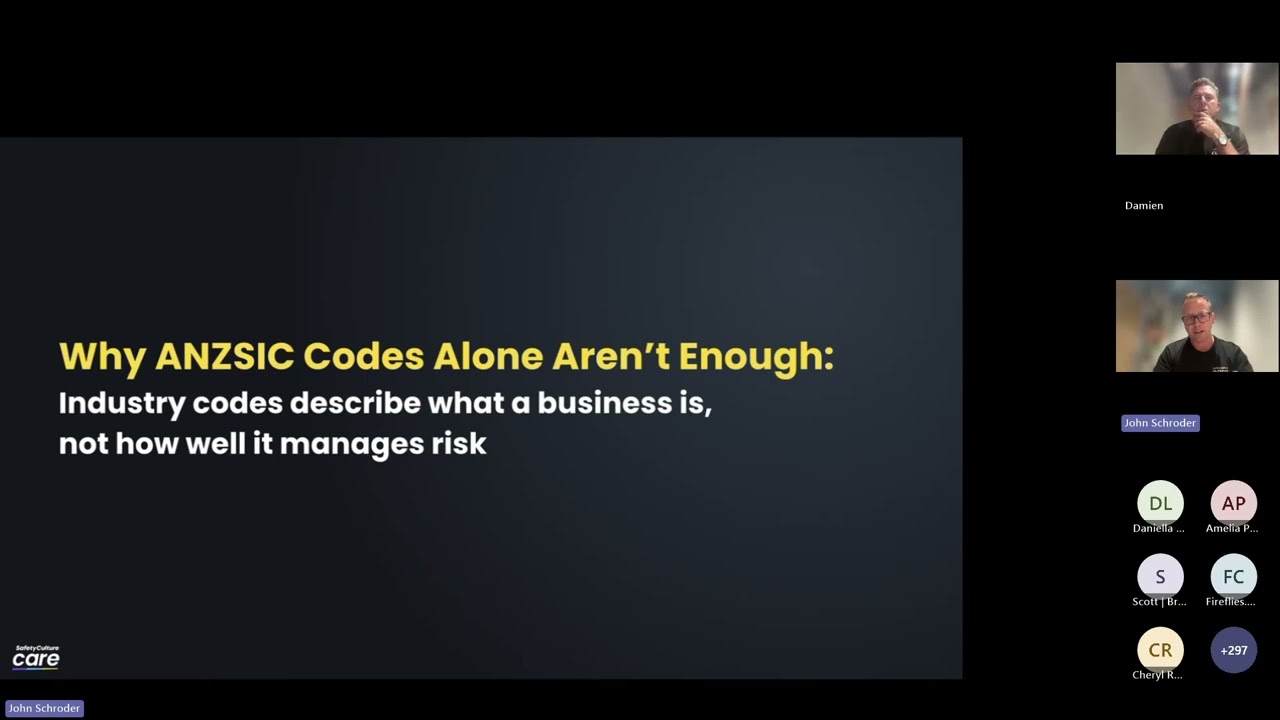
This is where the conversation gets important for brokers. The ANZSIC code submitted to the market tells underwriters what a business does, not how resilient it is. It doesn't capture whether a client has one supplier or ten, whether their BCP has been reviewed recently, or whether a second location could absorb the load if the first one went down.
That gap between assumed risk and operational reality is where businesses are most exposed right now — and it doesn't look the same across every industry.
A manufacturer relying on imported components faces a fundamentally different exposure to a retailer managing last-mile logistics. The risk is real across the board, but it isn't uniform, and understanding that distinction is what separates a well-placed risk from one that gets found out at claims time.

The uncomfortable truth: many businesses have never stress-tested their supply chain resilience, and their insurance program reflects that gap.
Brokers don't need to have all the answers. But asking the right questions is important to open a conversation that genuinely changes how a client thinks about their risk. Here are six topics worth raising at your next client touchpoint.
It's also worth prompting clients to review their buildings, contents, and stock sums insured. The cost to repair and replace has shifted significantly, and declared values that made sense a year ago may no longer reflect what it would actually cost to recover today.
Prevention is always cheaper than a claim, but prevention requires visibility. The Mitti platform helps businesses build the habits that reduce risk — regular inspections, asset checks, BCP documentation, and operational checklists that keep the right people across the right things.
Supply chain risk doesn't look the same in every business or every industry, and the conversations brokers need to have are becoming more specific, more operational, and more valuable as a result.
If this article raised questions about how well you really know your clients' risk profile, our next UAC webinar was built for exactly that.
Preventing the Preventable: Inside Industry Risks takes the next step — exploring the real operational risk profiles across hospitality, manufacturing, and retail, and how brokers can use that understanding to deliver tailored, industry-specific advice that goes well beyond policy placement.
Ready to take it further? Join us for a UAC-hosted webinar to unpack the real operational risks shaping client exposure across hospitality, manufacturing, and retail.
Missed our first session? Watch the recording of Beyond the ANZSIC Code to see how shifting from assumed risk to operational understanding helps brokers build stronger client profiles.
Insurance products are issued by Mitti Insurance Pty Ltd (formerly SafetyCulture Care Australia Pty Ltd) ABN 54 662 653 303 AFSL 544306 as agent for the insurer for the respective product. Neither we nor any insurer we represent provide any advice on any insurance based on any consideration of your objectives, financial situation or needs. Policy terms, conditions, limits, exclusions and underwriting criteria apply. Before making a decision on any product, please refer to the Policy Wording available from this website or call your broker for further information. If you purchase insurance, we will receive a commission and/or fee that is based on the premium.